Nearshore vs Offshore Software Development: Key Differences

Published Apr 24, 2026 | 12 min read


Here's a question every C-suite leader eventually faces: Where should we build our software?

Global software development has never been more accessible. Today, you can form a distributed engineering team across multiple continents within weeks. But with that access comes a real strategic decision, and getting it wrong is costly. Whether you're a CFO managing tightening budgets, a CTO architecting your next platform, or a digital transformation lead driving change across a legacy enterprise, the nearshore vs. offshore software development debate directly shapes your outcomes.

In short: nearshore and offshore are not the same thing, and treating them as interchangeable is one of the most common mistakes enterprises make.

This article breaks down exactly what sets these two delivery models apart. We'll look at cost structures, communication realities, time zone alignment, and how each model performs across industries like Fintech, Healthcare, SaaS, Logistics, and e-Commerce. And if you're operating in the DACH region - Germany, Austria, or Switzerland - we've got specific context for you too.

Let's get into it.

1. What Is Nearshore Software Development?

Nearshore development means outsourcing software work to teams in geographically close countries, typically within the same or adjacent time zones.

For a company based in Munich or Zurich, that might mean partnering with engineering teams in countries like Poland, Romania, or North Macedonia. The nearshore delivery model is built around proximity, and proximity drives a lot of value.

Core characteristics of the nearshore delivery model:

  • Geographic closeness - typically within 1 to 3 time zones of your home base
  • Time zone alignment - overlapping working hours enable real-time collaboration
  • Cultural compatibility - similar business practices, work ethics, and communication norms
  • Language alignment - higher rates of English and local-language proficiency in European tech hubs

Nearshore software development services are especially popular with companies that need fast iteration cycles and tight collaboration between in-house and external teams.

For distributed engineering teams in industries like Fintech or Healthcare (where regulatory compliance and rapid feedback loops matter), nearshore development delivers agility without sacrificing alignment.

2. What Is Offshore Software Development?

Offshore development takes a different approach. It means outsourcing to teams in distant countries, often across vastly different time zones, with the primary goal of reducing costs.

The most common offshore development hubs for European companies include Eastern and Southern European countries, India, Vietnam, the Philippines, and parts of Latin America. Offshore software development outsourcing has been around for decades and remains a dominant model for large-scale, cost-sensitive projects.

How the offshore delivery model typically works:

  • Long-distance collaboration - time zone gaps of 5 to 12 hours are common
  • Cost-driven structure - significantly lower hourly rates due to wage differences
  • Asynchronous workflows - teams operate largely independently with handoff-based communication
  • High output potential - large talent pools support aggressive scaling

Offshore models work best when project requirements are well-defined and stable. Think large enterprise migrations, legacy system modernization, or high-volume QA testing tasks where detailed documentation can substitute for constant real-time interaction.

According to Statista, the global IT outsourcing market reached approximately $484.86 billion in 2023, with offshore outsourcing making up a significant portion of that spend. The market is projected to continue growing, with expected revenues reaching approximately $634.18 billion by 2026.

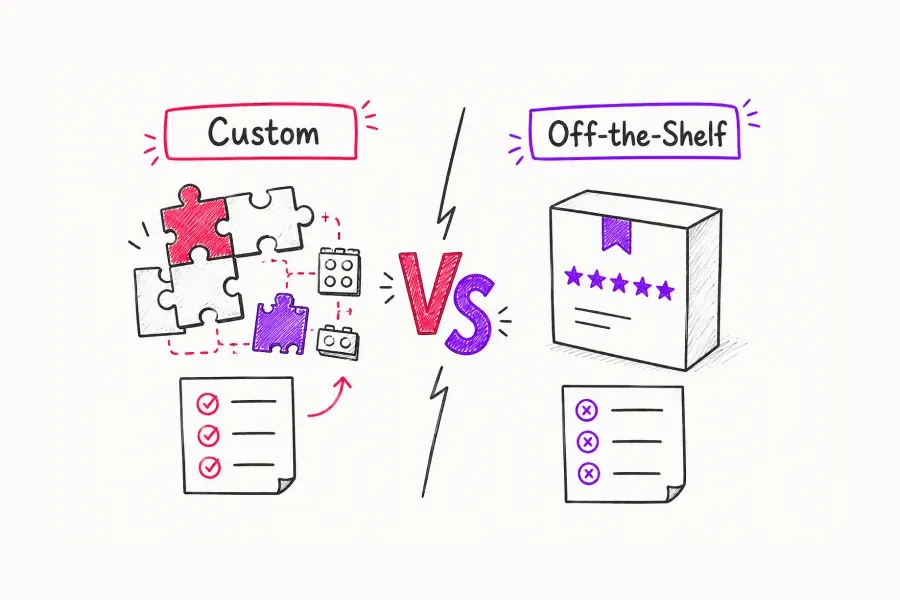
3. Nearshore vs Offshore Software Development: Key Differences

Now let's get to the core of it. Below is a structured comparison of the two models across the dimensions that matter most to C-suite and project management leaders.

Cost Structure

Nearshore: You'll typically pay more per hour than you would offshore. However, the total cost of delivery is often comparable, or even lower, once you account for rework, miscommunication, and project delays. Nearshore software development services offer moderate savings over in-house hiring, with significantly better ROI on collaboration-heavy projects.

Offshore: The upfront hourly rates are lower. But hidden costs accumulate fast. These include management overhead, timezone-driven delays, quality issues requiring rework, and onboarding complexity.

Communication & Collaboration

Nearshore: Real-time communication is achievable. Same-day calls, shared sprint ceremonies, and spontaneous Slack exchanges all work seamlessly. Language barriers are minimal in European tech hubs. Cultural alignment makes it easier for people to give and receive feedback and make decisions.

Offshore: Communication friction is a well-documented challenge. Asynchronous handoffs slow feedback loops. Language nuances affect requirements gathering. And when a critical bug surfaces at 9 AM in Munich, the offshore team might not start their day for another 4 to 6 hours.

Time Zone Alignment

Nearshore: With 1 to 3 hour time zone differences, you share most of your working day with your nearshore team. Daily standups, sprint reviews, and emergency escalations all happen in real time. This is particularly important for Agile and DevOps environments where continuous collaboration drives velocity.

Offshore: Overlapping hours are limited, often just 1 to 3 hours per day, if any. Teams adapt through asynchronous workflows, but this slows iteration speed. For fast-moving SaaS products or Fintech platforms requiring rapid feature deployment, this lag is a real competitive disadvantage.

Quality & Agility

Nearshore: Faster iteration cycles. Tighter feedback loops. Easier course-correction mid-sprint. Nearshore teams that integrate with your in-house developers behave more like an extension of your team than a separate vendor.

Offshore: Slower feedback loops mean issues often compound before they're caught. Quality is manageable with strong documentation practices, but it requires disciplined project management overhead. Agility suffers in environments where products are complicated and change quickly.

Scalability of Distributed Engineering Teams

Nearshore: Scaling is smoother because integration is tighter. Adding nearshore developers to an existing team requires less onboarding overhead. However, talent pools are smaller than offshore hubs, so niche specializations may be harder to source quickly.

Offshore: For large-scale projects requiring hundreds of engineers (think massive ERP implementations or government digital transformation programs), offshore hubs offer unmatched volume at cost-competitive rates.

Quick Comparison Table

FactorNearshoreOffshore
Hourly CostModerateLower
Total Project CostComparable or lowerCan escalate with hidden costs
Time Zone OverlapHigh (1–3 hrs difference)Low (5–12 hrs difference)
CommunicationReal-time, low frictionAsynchronous, higher friction
Cultural AlignmentHighVariable
AgilityHighModerate
ScalabilityModerateHigh
Talent PoolSmaller but specializedLarge

4. Challenges and Trade-Offs

No model is perfect. Choosing wisely means understanding the real limitations of each path.

Nearshore Problems to Anticipate

Budget constraints. Nearshore software development costs more per hour than offshore alternatives. For budget-constrained projects - especially in SMEs across the DACH region - this is a genuine barrier. The value equation usually favors nearshore when looking at the total cost, but when cash flow is tight, the difference in upfront rates is hard to ignore.

Niche talent scarcity. Eastern and Central European tech hubs are strong in full-stack development, cloud engineering, and quality assurance. But if your project requires highly specialized skills - say, rare legacy system expertise or top AI model training at scale - nearshore talent pools may fall short. You may need to broaden your search or combine nearshore with selective offshore hiring.

Offshore Problems to Anticipate

High coordination overhead. Managing distributed engineering teams across 8 to 10 time zone differences demands structured processes, disciplined documentation, and dedicated project management layers. This overhead is real, and it costs time and money. Many companies underestimate it in their initial business cases.

Communication friction impacting delivery. Offshore software development outsourcing introduces language and cultural differences that affect the quality of requirements gathering, feedback, and escalation. Even small misunderstandings in complex domains like Healthcare data compliance or Fintech regulatory logic can cascade into costly rework.

5. Strategic Considerations for the DACH Market

If you're running a technology operation from Germany, Austria, or Switzerland, the nearshore vs. offshore software development decision carries some regional nuance worth understanding.

Why DACH companies favor nearshore development. Cultural alignment is a significant factor. German-speaking enterprises often find communication style, work ethic, and precision standards more closely mirrored in Eastern and Southern European tech hubs like Poland, North Macedonia, or Romania than in Southeast Asian offshore centers. Furthermore, shorter travel distances make periodic on-site collaboration practical, something that builds trust and cohesion over long-term partnerships.

Regulatory and compliance considerations. Industries like Fintech and Healthcare operate under strict EU regulatory frameworks - GDPR, MiFID II, EU MDR, and others. Nearshore partners within the EU or with deep EU compliance experience reduce regulatory risk significantly. Offshore teams operating outside the EU jurisdiction introduce data handling complexities that legal and compliance teams must carefully manage.

Cultural alignment in long-term partnerships. Building software is not a transaction - it's a relationship. Long-term product development requires alignment on quality standards, accountability, and communication norms. Nearshore teams in European tech hubs tend to share more of these norms with DACH enterprises.

When offshore still makes sense for DACH companies. Large-scale capacity needs, aggressive cost reduction programs, or projects with stable, well-documented requirements may still favor offshore delivery. A hybrid approach is increasingly common among mature enterprises.

6. How to Choose the Right Model for Your Business

Ultimately, the right choice depends on your specific context. Here's a practical decision framework for C-suite leaders and project managers.

Key decision factors:

1. Budget vs. speed vs. quality. If speed-to-market and quality are non-negotiable, nearshore development is your ally. If cost reduction is the primary driver and timelines are flexible, offshore may work with proper management investment.

2. Project complexity and required expertise. Complex, evolving products - SaaS platforms, Fintech applications, healthcare tech - benefit from nearshore's tighter feedback loops. Stable, well-scoped projects with clear requirements tolerate offshore dynamics better.

3. Need for collaboration vs. independence. Agile environments that rely on daily collaboration, sprint rituals, and continuous feedback favor nearshore. Projects that can be defined upfront and executed independently are better suited to offshore.

Hybrid Approaches

Moreover, many enterprises combine both models strategically. A typical hybrid might look like this: a nearshore team leads product architecture and sprint delivery, while an offshore team handles QA automation, data entry, or maintenance at scale. This approach captures the best of both worlds, collaboration quality from nearshore and cost efficiency from offshore, when managed with clear governance.

Conclusion: Making the Smart Investment in Global Development

So, where does that leave us?

The nearshore vs. offshore software development decision is not about which model is "better" in the abstract. It's about which model aligns with your business goals, project dynamics, and long-term partnership ambitions.

Nearshore development offers time zone alignment, cultural fit, faster iteration, and lower total-cost risk - making it the stronger choice for innovation-driven, compliance-sensitive, and collaboration-heavy environments. Especially for DACH enterprises building Fintech platforms, healthcare applications, or logistics technology, the nearshore model represents a strategic advantage that offshore models simply can't replicate.

Offshore development still delivers real value at scale for cost-sensitive, high-volume, and clearly scoped work. But the coordination overhead and communication friction are real - and they compound in complex, fast-moving projects.

The smartest enterprises don't make this choice based on rate cards alone. They make it based on total value delivered - and they build delivery models that reflect their actual product strategy, team dynamics, and market ambitions.

We've seen this play out across industries. And we're passionate about helping organizations make this decision with clarity and confidence.

Start Building with a Nearshore Partner Today

If you're evaluating your global development strategy or struggling with the coordination overhead of your current model, we'd love to talk.

Whether you're a CTO assessing distributed engineering options, a CFO looking to align delivery costs with quality outcomes, or a digital transformation lead navigating a complex modernization initiative, we bring the experience and the team to help you move faster and smarter.

Get in touch with us today to explore how a nearshore delivery model can accelerate your next initiative. We're ready to discuss your specific context, your industry requirements, and how we can build a partnership that delivers real, sustainable value.  

Did this article help clarify your thinking on nearshore vs. offshore software development? If it did, we'd challenge you to share it with a colleague who's wrestling with the same decision. The more informed our industry becomes, the better we all build.

Aleksandar Grujoski

Aleksandar Grujoski

in

Digital Marketing Specialist

Book a Free Consultation

Select your industry*

Please select your industry*

Select your service type

Please select your service type

calendarWhen is the the best time to get in touch with you

The fields marked with * are required

This site is protected by reCAPTCHA and the Google Privacy Policy and Terms of Service apply.

View all posts