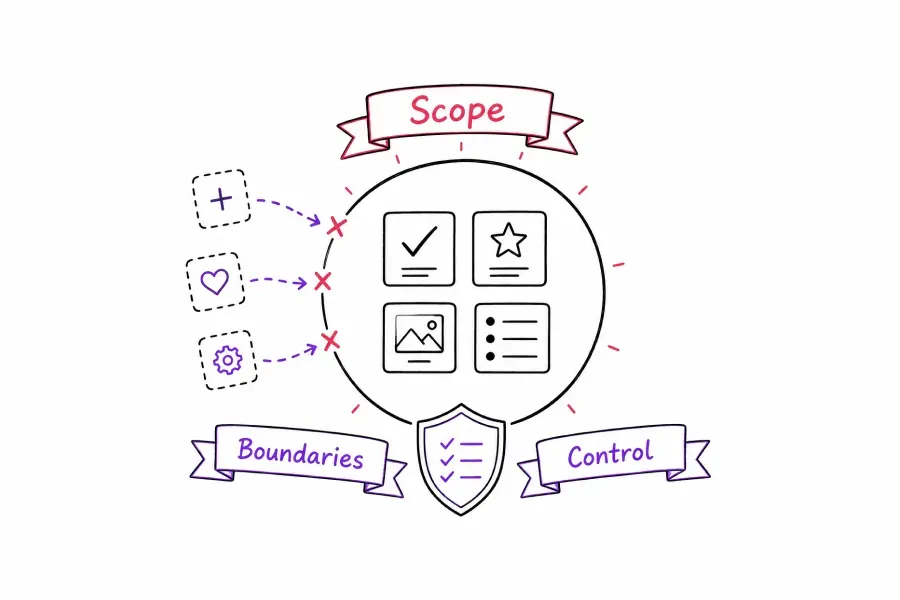
What Is Scope Creep and Why It Destroys Financial Predictability
By the Numbers
| 31% | 45% | 56% |
| of software projects delivered on time & on budget | average budget overrun on large IT projects | less value delivered than predicted on average |
| Standish Group CHAOS Report | McKinsey & Company | McKinsey & Company |
Scope creep in project management refers to the gradual (or sudden) expansion of a project's features, requirements, and deliverables beyond what was originally agreed upon. The Standish Group's CHAOS Report consistently finds that only about 31% of software projects are delivered on time and on budget. A major reason? Uncontrolled scope expansion.
There's a critical distinction we need to make here. Not all scope changes are bad. When a change is formally reviewed, approved, and budget-adjusted, it's a managed change. Scope creep occurs when changes happen informally - without going through a change control process. That's when the financial damage begins.
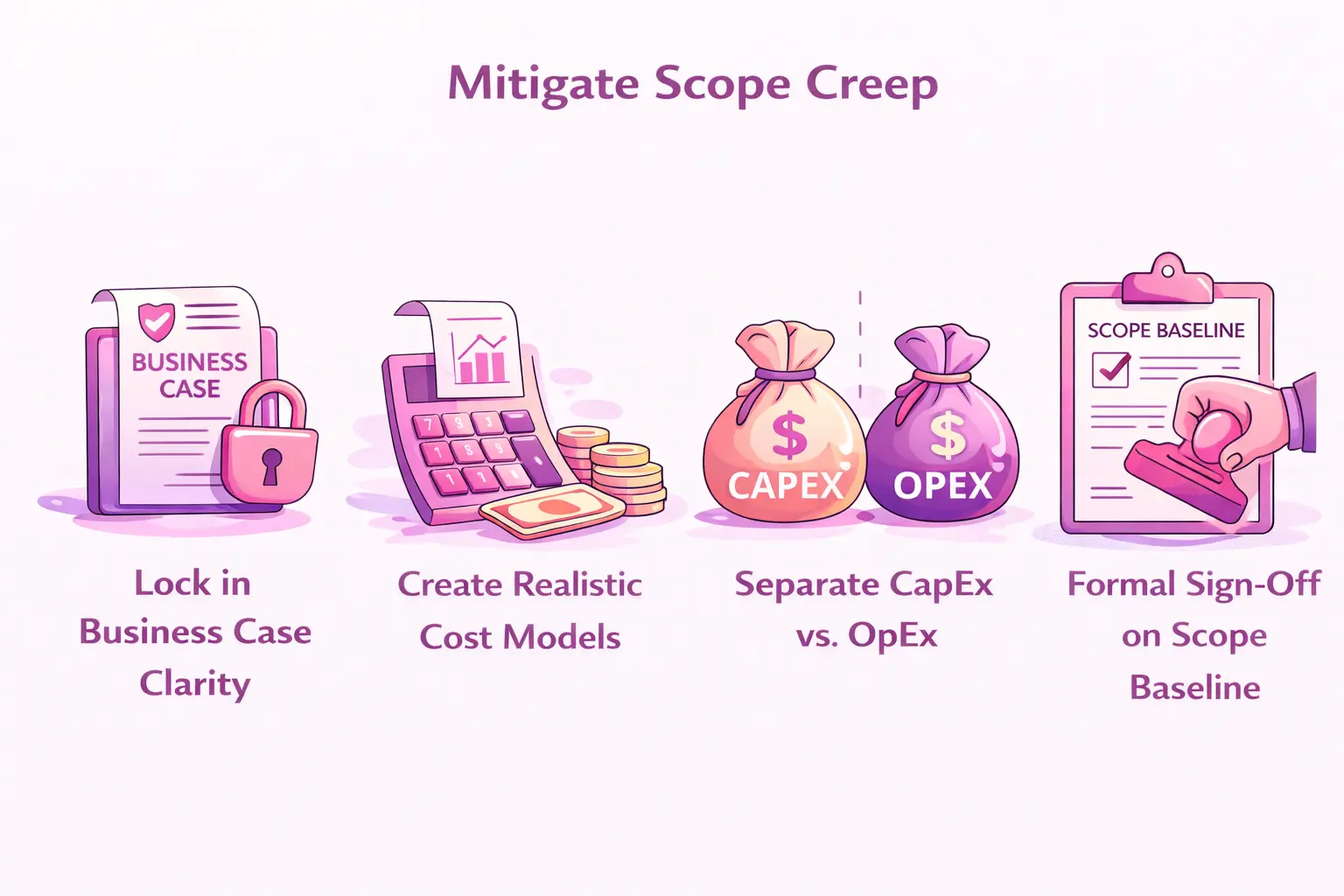
Think of it this way: the scope baseline is your financial contract with the project. The moment we start working outside that baseline without an approved change request, we're essentially doing unpaid overtime as an organization. We're spending money that was never budgeted.
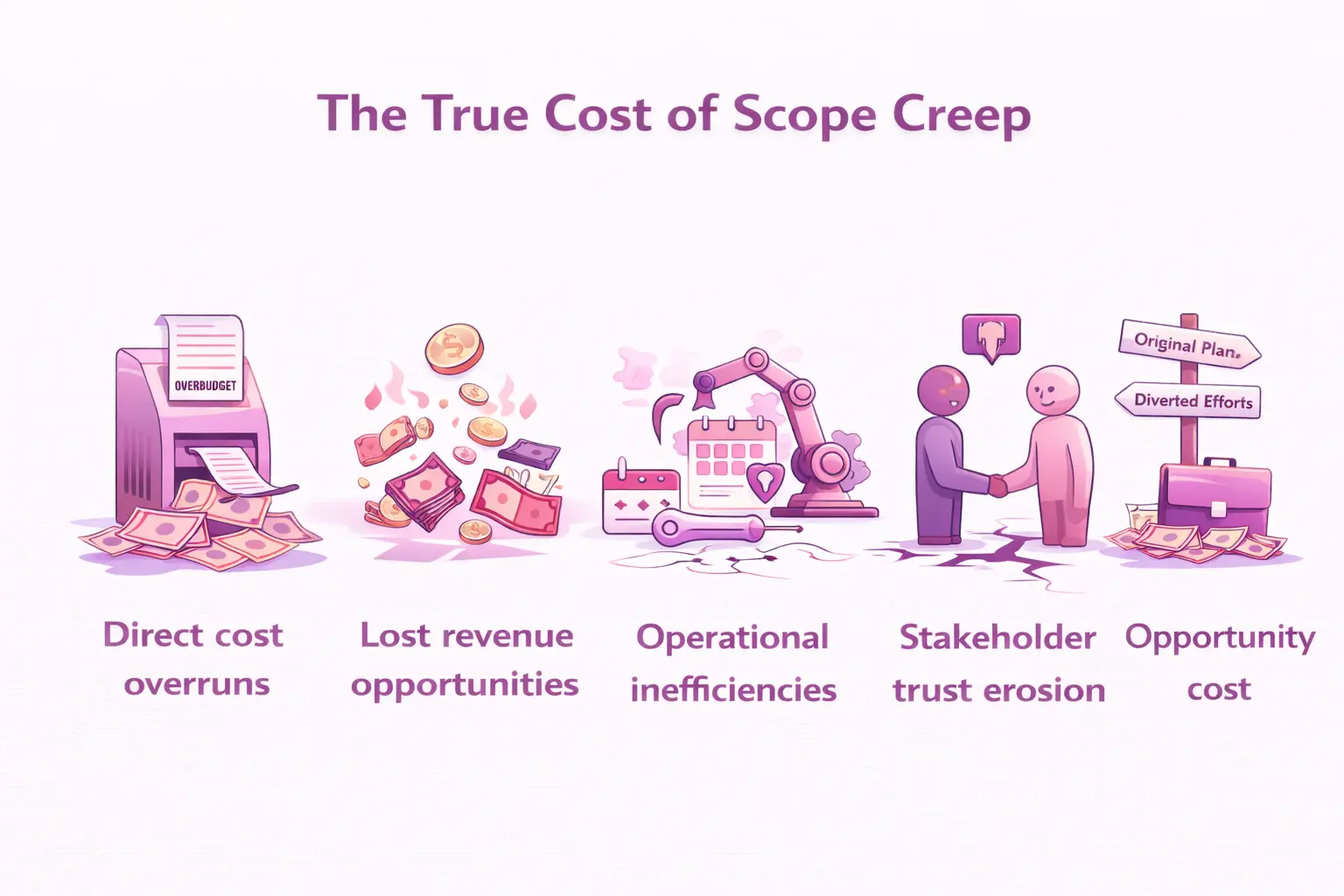
The True Cost of Scope Creep
The direct costs are obvious: cost overruns, delayed project timelines, and inflated software development cost estimation. But the indirect costs? They're often even more damaging. McKinsey & Company research found that large IT projects run 45% over budget and 7% over time on average, while delivering 56% less value than predicted.
Here's what scope creep really costs organizations:
- Direct cost overruns: additional labor, tools, and infrastructure not in the original plan.
- Lost revenue opportunities: delayed launches mean delayed market capture.
- Operational inefficiencies: teams stretched thin across expanding work.
- Stakeholder trust erosion: when budgets blow up, confidence in digital investment falls.
- Opportunity cost: capital locked in runaway projects can't fund other initiatives.
Experts estimate that through 2027, 70% of digital initiatives will not reach their intended objectives largely due to scope, budget, and value misalignment. The financial stakes could not be higher.
Real-World Scope Creep Examples
We don't have to look far for cautionary tales. The Denver International Airport's automated baggage handling system is one of the most cited scope creep examples in history. The project experienced over 2,000 design changes, resulting in a two-year delay and doubling its budget. What started as an innovative idea became a financial disaster.
Closer to the everyday business world: a software development team working on a customer portal watched their project stretch from ten months to three years because the marketing department kept requesting feature additions that clashed with the original design. Nobody said no. Nobody managed the change control process. And the original project scope became unrecognizable.